

Originally published 2025-09-11. Rewritten October 2026.
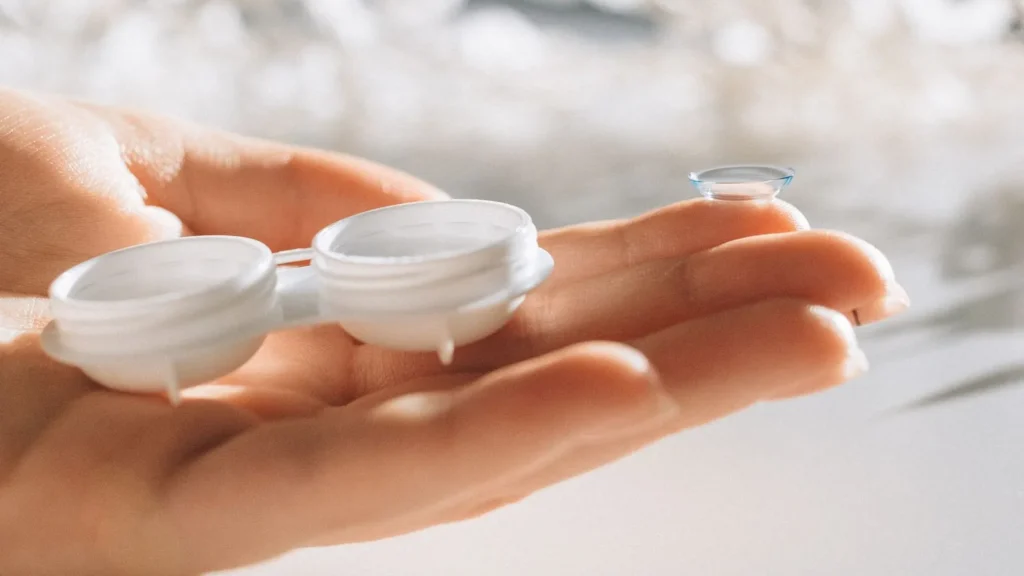
A contact lens fitting is an appointment where an optometrist checks that contact lenses are suitable for your eyes, measures the size and curve of your cornea, chooses the right lens type and prescription, lets you try lenses on, and teaches you how to put them in, take them out and look after them safely. It’s needed because a contact lens prescription is different from a glasses prescription. Lenses sit directly on the eye, so the fit affects comfort, vision and eye health. Follow-up visits check that the lenses are working well.
Key points – A glasses prescription alone isn’t enough to order contact lenses. – The fitting includes an eye health check, measurements, trial lenses and training. – Options include daily, fortnightly and monthly soft lenses, toric lenses for astigmatism, multifocals and lenses for dry eyes. – Follow-up appointments are part of safe lens wear. – Fittings are available with our optometrist in Hatfield.
Why do I need a contact lens fitting?
Contact lenses rest on the cornea, so they must match its shape and size. A poorly fitting lens may move too much, blur vision, feel uncomfortable or, in some cases, contribute to eye problems such as reduced oxygen to the cornea or infection. A fitting makes sure the lens is right for your eye, your vision and your lifestyle.
What happens during a contact lens fitting?
Step 1: Eye exam and discussion
If you haven’t had a recent eye exam, one will be done first. The optometrist asks about your lifestyle, such as sport, long screen hours, travel or allergies, and how often you want to wear lenses.
Step 2: Measurements
The curvature and diameter of your cornea are measured, and your tear film and eyelids are checked. Dry eyes or allergies influence which lens is best.
Step 3: Choosing a lens type
-
Daily disposables
a fresh pair each day, convenient and low-maintenance.
-
Fortnightly or monthly lenses
reusable with proper cleaning.
-
Toric lenses
designed for astigmatism.
Multifocal lenses
for near and distance vision after 40.
-
Lenses for dry eyes
materials and designs that may feel more comfortable.
Step 4: Trial lenses
You’ll wear trial lenses while the optometrist checks how they sit and move on your eye, and tests your vision with them.
Step 5: Insertion and removal training
You’ll practise putting lenses in and taking them out with guidance, and learn cleaning, storage and replacement routines.
Step 6: Follow-up
A follow-up visit checks comfort, vision and eye health after you’ve worn the lenses for a while. Adjustments are made if needed.
Are contact lenses right for me?
Contacts can suit many people, including: – Students and professionals who prefer not to wear glasses – People who play sport – Those with higher prescriptions who want a wider field of view – People who want flexibility to wear glasses and lenses on different days
Some people need extra care with lenses, for example those with severe dry eye or frequent eye infections. Your optometrist will advise.
How do I care for contact lenses safely?
- Wash and dry your hands before handling lenses.
- Never use tap water or saliva to clean or store lenses.
- Use fresh solution every time, and don’t top up old solution.
- Replace lenses and cases as directed.
- Don’t sleep in lenses unless your optometrist has approved it.
- Remove lenses if your eyes are red, painful or blurry, and seek advice.
- Keep your follow-up appointments.
When should I remove my lenses and get help?
Take your lenses out and contact an optometrist or doctor urgently if you have eye pain, increasing redness, light sensitivity, discharge or blurred vision that doesn’t clear. These can be signs of infection.
How long does a fitting take?
Allow about an hour for a first fitting, including training. Follow-ups are shorter. Experienced wearers may need less time.
Does medical aid cover contact lenses?
Many medical aid plans include optical benefits that may contribute to contact lenses. Benefits vary by scheme. iMed accepts all major medical aids.
Contact lens fitting at iMed, Hatfield
Our optometrist, MJ Mothemi, fits a range of lenses, including specialty lenses for astigmatism and dry eyes and multifocals, at Shop B006C, The Fields, 1066 Burnett Street, Hatfield. We’re close to the University of Pretoria and easy to reach from across Pretoria’s eastern suburbs. Call 064 507 7048 to book a fitting, or read more about contact lenses at iMed.
What questions should I ask my optometrist?
Write your questions down before the appointment so nothing is forgotten. Useful ones include: – Has my prescription changed, and by how much since my last test? – Are my eyes healthy, including the optic nerve, retina and lens? – Do I have any risk factors for glaucoma, cataracts or macular degeneration? – Which lens type suits my work, studies and driving? – Would contact lenses be suitable for me, and which kind? – How often should I come back, given my age and health? – Is anything in my general health, such as diabetes or blood pressure, affecting my eyes? Ask for an explanation in plain language, and ask for a copy of your prescription if you need one. If anything you’re told is unclear, ask again. A good eye exam includes time for questions. At iMed, if an eye finding needs medical follow-up, a doctor is available in the same building in Hatfield and Soshanguve.
Frequently asked questions
Can I get contacts with astigmatism?
Yes. Toric contact lenses are designed for astigmatism, and your optometrist will check whether they suit your eyes.
Is a contact lens prescription the same as a glasses prescription?
No. A contact lens prescription includes extra measurements, such as lens curve and diameter, and is determined during a fitting.
Does it hurt to put contact lenses in?
It may feel strange at first, but it shouldn’t hurt. With practice, most people find insertion quick and comfortable.
Can I wear contacts if I have dry eyes?
Many people with mild to moderate dry eyes can wear specially chosen lenses. Your optometrist will assess your tear film first.
How often do I need a contact lens check-up?
Usually at least once a year, or as your optometrist advises, to monitor eye health and lens fit.
This page is general health information and does not replace a consultation with a qualified healthcare professional. If you have an emergency, call 064 507 7048 or go to your nearest emergency unit.